Disaster Management Information
|
No |
Contact Point |
Name |
Address |
Telephone |
|
1 |
Divisional Secretariat kegalle |
Mr.sugath jeewantha (Development Officer-Disaster Relief Service) |
Divisional Secretariat kegalle |
0717550720 0787300344 |
Disaster Management of Kegalle Divisional Secretariat
There are four main types of disasters (WCPT, 2010):
| Natural disasters. |
These disasters include floods, hurricanes, earthquakes and volcano eruptions that can have immediate impacts on human health, as well as secondary impacts causing further death and suffering from floods causing landslides, earthquakes resulting in fires, tsunamis causing widespread flooding and typhoons sinking ferries
| Environmental Emergencies. |
These emergencies include technological or industrial accidents, usually involving hazardous material, and occur where these materials are produced, used or transported. Large forest fires are generally included in this definition because they tend to be caused by humans.
| Complex emergencies. |
These emergencies involve a break-down of authority, looting and attacks on strategic installations. Complex emergencies include conflict situations and war.
| Pandemic emergencies. |
These emergencies involve a sudden onset of a contagious disease that affects health but also disrupts services and businesses, bringing economic and social costs.
There are many Disaster Situations in this Division. Like
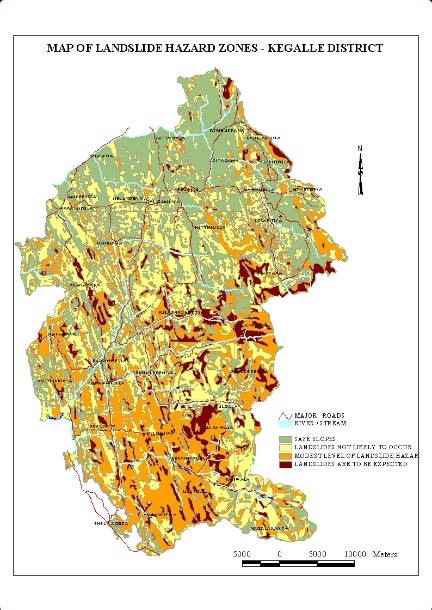
01. Landslides
02. Rockfalls
03. Cyclones
04. Lightnings
05. Falling trees
06. Floods
07. Damages of Animals and
08. Fires
Emergency Management
Emergency Management is the generic name of an interdisciplinary field dealing with the strategic organization management processes used to protect asses of an organization from hazard risks that can cause disasters or catastrophes, and to ensure the continuance of the organization within their planned lifetime.
Emergency Management is a systematic process leading to action before, during and after a disaster to save lives and prevent injury. "Disaster" here means a major emergency that exceeds the community's capacity to respond successfully with its own resources. Emergency Management is organized into four phases:
- Mitigation: actions taken to eliminate a hazard or reduce its potential impact.
- Preparedness: planning for major emergencies, including training and exercises.
- Response: actions taken in response to emergencies.
- Recovery: actions taken after a disaster to restore services and reconstruct communities.
High Risk Areas
Main High Risk Areas of Kegalle Division
1. Ganthuna Pallegama North GN Division
2. Ganthuna Pallegama South GN Division
3. Belihulwana GN Division
4. Wathura GN Division
Disaster Relief Housing Programme
Ongoing Housing Projects under Disaster Relief Housing Programme
| # | Project | GN Division | Number of houses |
| 1 | Parambe Estate - Parambe Division | Bossella GN Division | 32 |
| 2 | Parambe Estate - Bossella Division | Bossella GN Division | 26 |
| 3 | Parambe Estate - Dandeniya Division | Eregama GN Division | 35 |
| 4 | Yatideriya Division | Undugoda GN Division | 15 |
Contact Details
Contact Point |
Address |
Telephone |
| Ministry of Disaster Management | Vidya Mawatha, Colombo 07 | +94 112 665 352 |
| National Disaster Relief Service Center | Vidya Mawatha, Colombo 07 | +94 112 665 258 |
| Disaster Management Center | Vidya Mawatha, Colombo 07 |
+94 112 136 136 +94 112 670 070 +94 112 136 100 |
| District Disaster Management Coordinating Unit | Kegalle District Secretariat, Kegalle | +94 352 222 603 |
| NBRO Kegalle District Office | No: 190 / 146 Town Wood, Kegalle. | +94 352 221 798 |
| Kegalle Divisional Secretariat | Rathambalawaththa Road, Kegalle | +94 352 230 452 |
| Disaster Relief Service Officer | Divisional Secretariat, Kegalle | +94 717 683 101 |
| Visit Disaster Management Center Web Site | Click Here to Visit | |
| Visit Department Of Meteorology Web Site | Click Here to Visit |